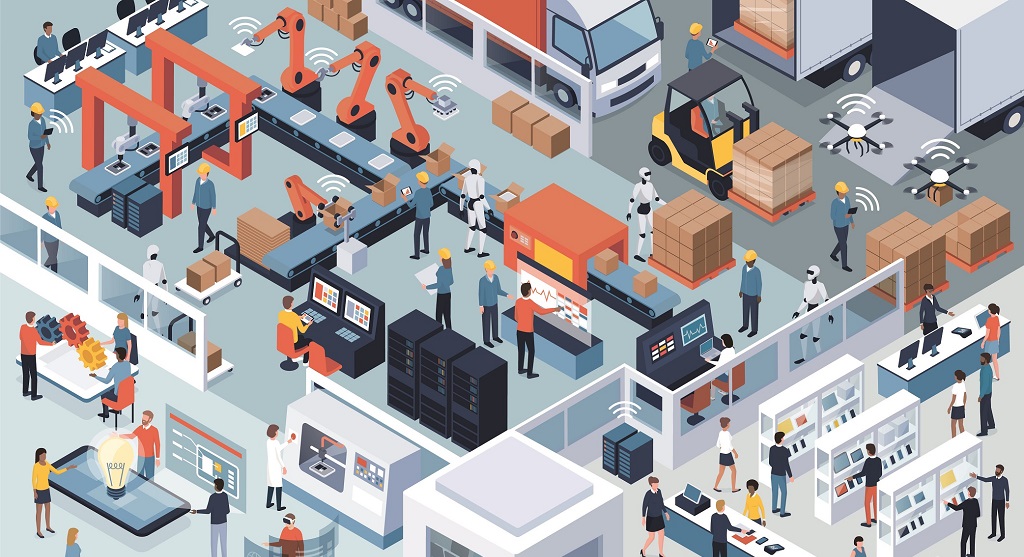
Supply chain is an integrated system of processes, information flow, financial flow and physical flow of sourcing the materials to create a product or service to deliver to customers. Its performance commonly contributes to company success or failure as the majority of company costs is an attribute to the supply chain expenditure. No matter what business you are in, the supply chain is getting riskier: economic volatility, pandemic, climatic concerns, regulations etc. Reshaping the supply chain to sense and quickly response to customer demand with risk mitigation is imperative. The supply chain transformation requires a top-down holistic approach and strong commitment of the top management.
Supply Chain Strategy and design
Often supply chain strategies are not aligned toward common or well-understood company goals. To satisfy the customer demand for example, sales & marketing wants to minimize stockouts whereas other departments seek efficiency. That said, the continuing tradeoffs between one departmental objective and others or the conflict of interests can be challenging in achieving revenue growth and without compromising margins. A successful supply chain strategy development requires sustained top management attention to better address business challenges, identify and prioritize the broad objectives that a company wants to achieve. It also needs the establishment of a common understanding in the organization.
Supply chain planning and execution
Many companies tend to focus more on the supply chain execution than planning because plans do not adequately reflect today’s dynamic environment. To create more responsive and competitive advantages, companies are forced to integrate all business units throughout the supply chain. Therefore, bridging the gap between supply chain planning and execution is the first step toward greater efficiency, transparency and collaboration.
Performance management
Measuring supply chain performance can push an enterprise to take action for greater improvement. Traditionally, companies have tracked their performance based largely on accounting principles. Financial measures are certainly important but they are insufficient in serving various perspectives such as operational effectiveness and efficiency as well as strategic non-financial performance. Developing the right measurement framework and defining appropriate indicators can help companies succeed the competition.
Leveraging technology
Technology has a big impact on every part of supply chain. It enables visibility, optimization, agility and analytics etc. that cannot be achieved in manual or analog ways. A success of the supply chain technology implementation requires deep knowledges and efforts, essentially collaboration and alignment of processes, people and technology to maximize potential benefits. However, choosing the best-fit technology can be overwhelming and it is significant financial and time investments. Learn more how our team can help your company achieve the business goals.